To assess the quality of quartz stone, you can start with the following aspects: “look, scratch, test, and compare.” Using simple tools and methods, you can generally distinguish between good and poor quality.
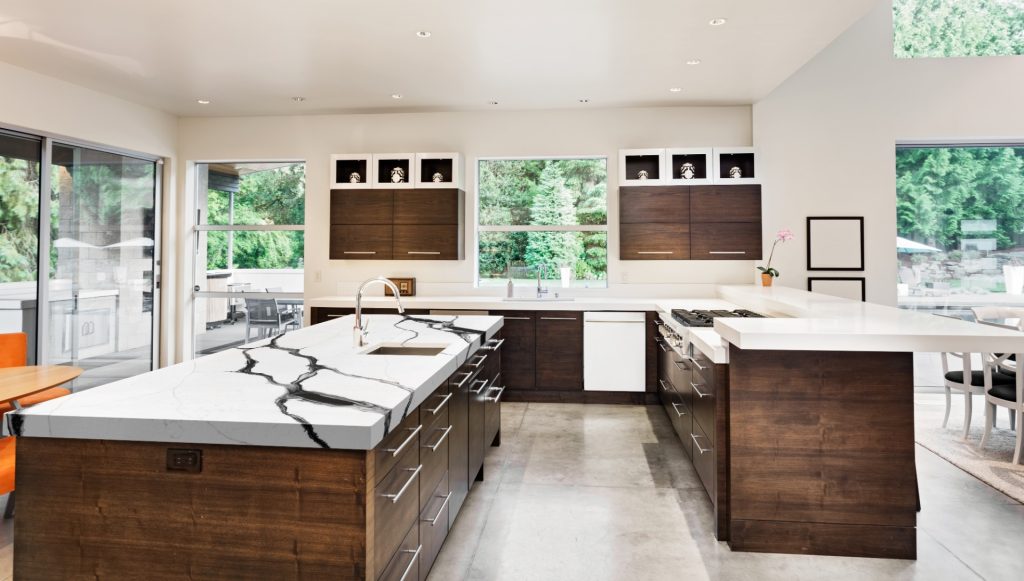
On-site “Four-Step Testing Method”
During the selection process, you can perform these small tests directly on the samples:
Test for acid resistance with vinegar: Pour a small amount of white vinegar onto the surface of the quartz stone and let it sit for a few minutes. If bubbles appear, it may indicate the presence of cheap calcium carbonate (calcium powder), which is a sign of inferior quality. Genuine high-quality quartz stone will not react in this way.
- Testing hardness with a hard object: Use a steel nail or key to vigorously scratch the surface of the sample. High-quality quartzite has great hardness and will only leave a black metallic mark, which can be wiped away by hand. If white powder or deep scratches remain, it indicates insufficient hardness and poor quality.
- Testing stain resistance with soy sauce: Drop a few drops of soy sauce or dark soy sauce onto the sample surface, wait for 10 to 24 hours, then wipe it off with a damp cloth. High-quality quartzite stains won’t penetrate, leaving no trace after wiping; if discoloration occurs, it indicates insufficient density, making future maintenance difficult.
- Heat resistance test by burning: Use a lighter to burn the edge of the sample for a moment. Inferior quartz stone with high resin content may burn and turn yellow; high-quality quartz stone is heat-resistant, and after burning, wiping with water leaves almost no trace.
“Look and Compare” Quick Tips for Daily Use
In addition to the above experiments, you can also be vigilant in the store:
Observation and Smell: High-quality quartz stone has a smooth surface, with no obvious pores or grain shedding, and does not emit a pungent chemical odor when brought close to the nose.
Weigh it: Among samples of the same size, the heavier one usually has higher density and more quartz sand content, indicating better quality.
💡 Shopping Guide: Avoiding Pitfalls and Making Decisions
The price is a reference: excessively low quotes often indicate low quality. If the price is significantly below the market average (e.g., below 200 yuan per square meter), extra caution is required, as such products are likely to have insufficient quartz sand content or use inferior materials as substitutes.
Particle size depends on preference: monochromatic or fine-grained quartz stone is generally smoother, with fewer surface impurities and easier maintenance. Although intricate textures are visually appealing, they may be more prone to trapping dirt in the gaps.
The thickness must meet the standard: For kitchen countertops, it is recommended to choose materials with a thickness of 1.5 centimeters (15mm) or more. Countertops with a thickness below 1.5 centimeters risk cracking under force (e.g., chopping bones).